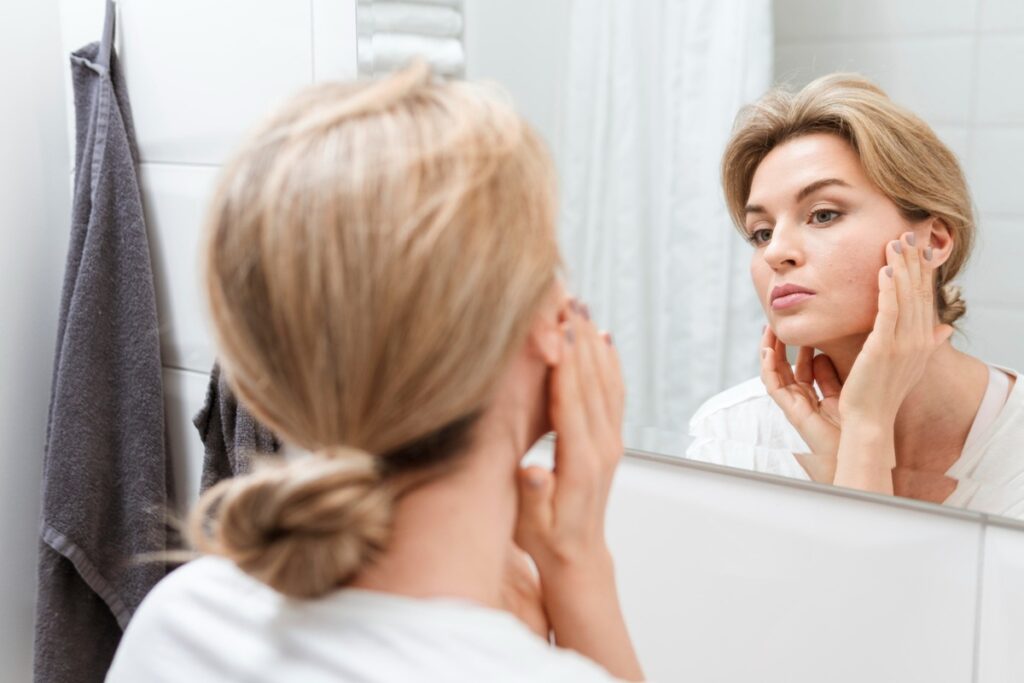
Reduction of wrinkles and fine lines, boost in collagen and elastin production… This anti-aging ingredient offers a wide range of benefits. Still relatively unknown, it may soon become the new superstar of our skincare routines. Let’s take a closer look.
The anti-aging cosmetics market is overflowing with innovations and active ingredients. From hyaluronic acid to collagen, not to mention retinol or bakuchiol, there’s no shortage of options.
But one lesser-known ingredient is starting to gain attention. Already present in many formulas, including lip balms and dietary supplements, this compound alone can stimulate collagen production, improve skin hydration, protect against free radicals, and strengthen the skin barrier. Not bad, right?
Completely natural, this active ingredient already found in the skin also helps improve firmness and texture. Without realizing it, you might already be using it daily.
“Peptides are molecules made up of 2 to 50 amino acids. They are the building blocks of proteins like collagen, elastin, and keratin. Their low molecular weight allows them to penetrate the skin layers to perform specific functions,” explains Stéphanie Soulé, PhD in Life and Health Sciences at Typology.
Applied to the skin, peptides act as messengers, sending signals to skin cells to produce more collagen or elastin.
A complex but promising ingredient
If peptides aren’t as widely talked about as other anti-aging ingredients, it may be because they’re more complex to understand.
In fact, there are four categories, each with specific properties. First, there are signal peptides, commonly used in anti-wrinkle treatments, these stimulate the production of collagen, elastin, and hyaluronic acid.
Then, carrier peptides help deliver trace elements (like copper, manganese, iron) to skin cells, aiding in repair and regeneration processes, as explained by Soulé.
Next are enzyme-inhibiting peptides, which block the action of enzymes responsible for collagen breakdown, helping slow visible signs of aging.
Finally, neuropeptides inhibit the release of chemical signals that cause muscle contractions. A well-known example is Argireline, which relaxes facial muscles responsible for expression lines, similar to Botox.
Suitable for sensitive skin
One major advantage of peptides? They’re suitable even for sensitive skin.
In her book My Skincare Code, Dr. Chahinez Filali recommends using peptides morning and evening, and choosing formulas that combine them with ceramides, antioxidants, or exfoliants like AHAs and BHAs, which support cell turnover and fight aging signs.
Also, make sure to opt for leave-on products (like creams or serums) to allow for better peptide absorption.
But why the sudden enthusiasm for peptides in the cosmetics industry? Recently, they’ve become the subject of increasing scientific research to better understand how they work.
“Studies on their effectiveness, stability, and tolerance are multiplying, reinforcing their legitimacy in formulations,” says Dr. Soulé.
However, she cautions: “In the anti-aging skincare field, their overall effectiveness still requires further clinical studies. Some peptides show promising results in terms of firmness, hydration, and wrinkle reduction, but they don’t yet have as strong scientific backing as more established ingredients.”