After 50, your skin changes and so should your makeup: expert Cristelle Ballet shares her tips on eyeshadow and age appropriate techniques.
Over time, the skin evolves, and our beauty habits sometimes need to evolve too. Thinner skin, less firmness, increased dryness: these small changes invite us to rethink our gestures and products, without giving up the joy of wearing makeup.
To help navigate this transition, professional makeup artist Cristelle Ballet (@frenchtouchofmakeup) addressed the most frequently Googled questions about makeup for mature skin.
Her goal: to identify common mistakes, share helpful techniques, and above all, prove that with just a few simple adjustments, makeup can remain a trusted ally at any age.
Makeup for mature skin: adjust, don’t hide
When skin changes, makeup should adapt, not to conceal, but to support. Thick foundations and heavy powders that freeze facial features are out; what matters now is lightness and hydration.
Speaking to ELLE french magazine, Cristelle Ballet recommends formulas that blur imperfections without weighing the skin down, with fine, almost skincare-like textures that merge seamlessly with the complexion.
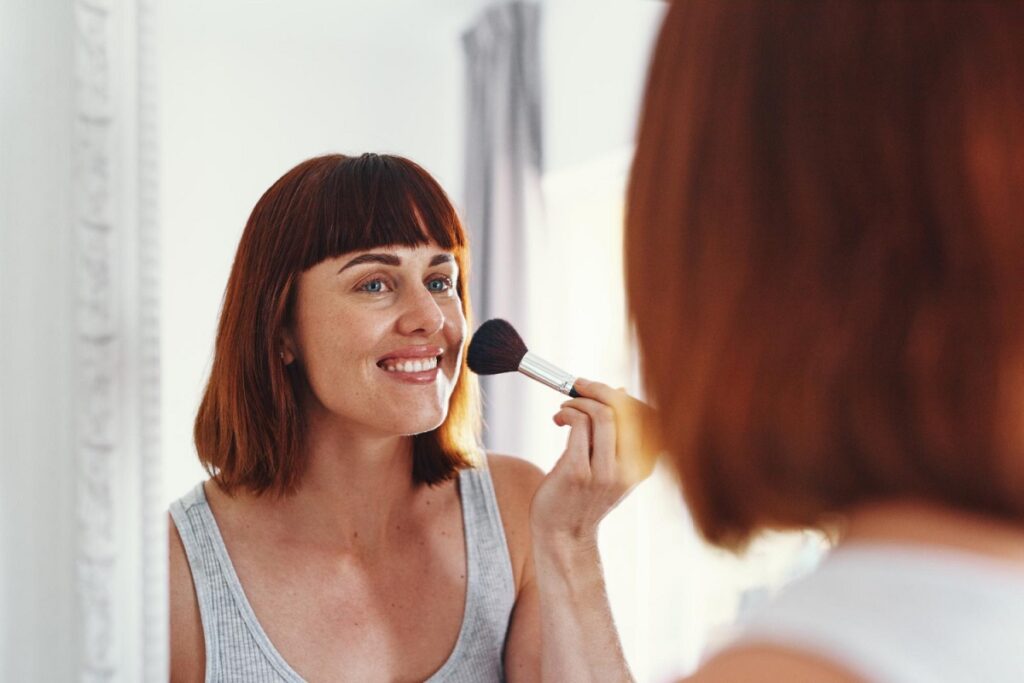
Applying makeup with a brush in precise touches helps maintain transparency where the skin needs to breathe.
For the eyes, the key is softness. Creamy textures or pencil formulas define the eyes without adding heaviness, while matte shadows are preferred over shimmery ones, which can emphasize texture in unflattering ways.
Ultimately, what matters most is desire, makeup isn’t meant to erase the years but to enhance what’s important: radiance, expression, and confidence. That’s where its true power lies.
Framing the eyes: brows and eyeshadow go hand in hand
If there’s one area that reflects the passage of time, it’s the eyes. And everything starts with a step that’s often overlooked: the eyebrows.
A striking gaze isn’t just about eyelids or lashes, but also about the arch that frames the face. Over time, brows tend to thin out, lose density, and sometimes even symmetry.
That’s why it’s so important to refine and redefine them to restore balance and expressiveness.
There’s no need to overdo it. Just choose a pencil that matches your natural brow color. For blondes or redheads, match the tone closely.
For brunettes, go half a shade lighter to soften the look. The idea isn’t to redraw the entire brow but to subtly add fullness where it’s needed, while respecting its natural shape.
Well-groomed brows give the whole face more definition.
Eyeshadows and eyeliner: the right choices after 50
When it comes to eyelids, the approach changes as well. Shimmer isn’t off-limits, but it does require a more subtle touch.
Instead of applying it under the brow bone, it’s better used as a soft accent in the center of the lid or at the outer corner, to catch the light without weighing down the eyes.
As a base, matte or slightly satin-finish shadows in soft tones like taupe or beige offer a more flattering result. They help define the eyes without emphasizing fine lines or making the eyelids look heavy.
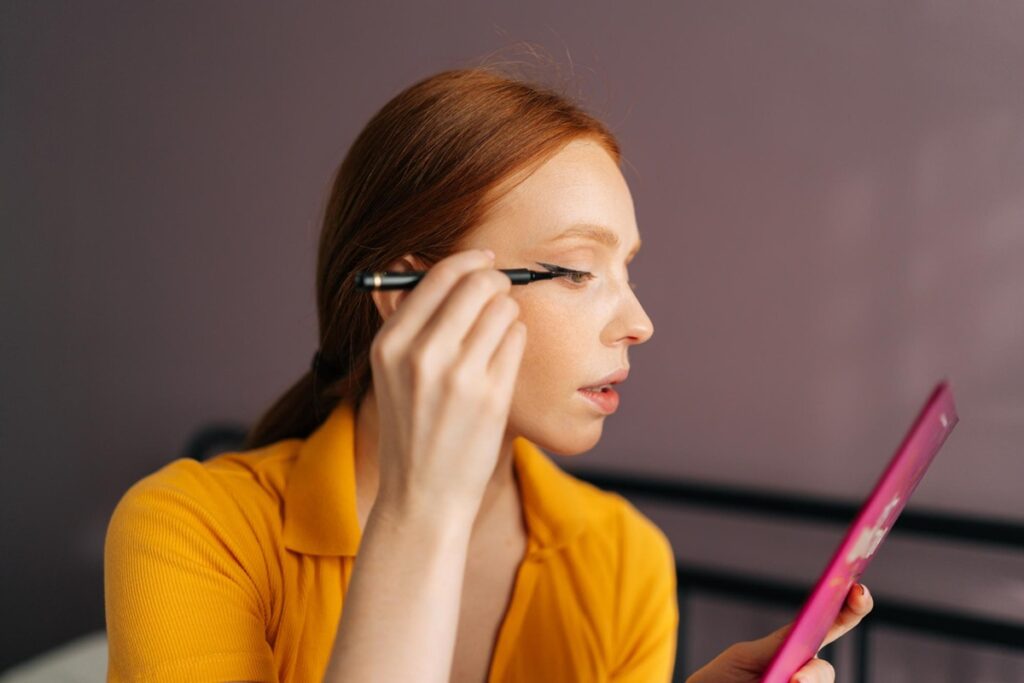
Finally, eyeliner requires a delicate hand. Harsh, black, and sharp lines tend to age poorly on less firm eyelids. As the expert suggests, it’s better to go for a smudged pencil along the lash line, softer and more blended.
By diffusing the line, you maintain intensity in the eyes without hardening the features or drawing attention to areas you’d rather soften.