The art of facial gymnastics is gaining popularity, yet what does science truly tell us? We investigate this trend that’s toning both cheekbones and opinions.
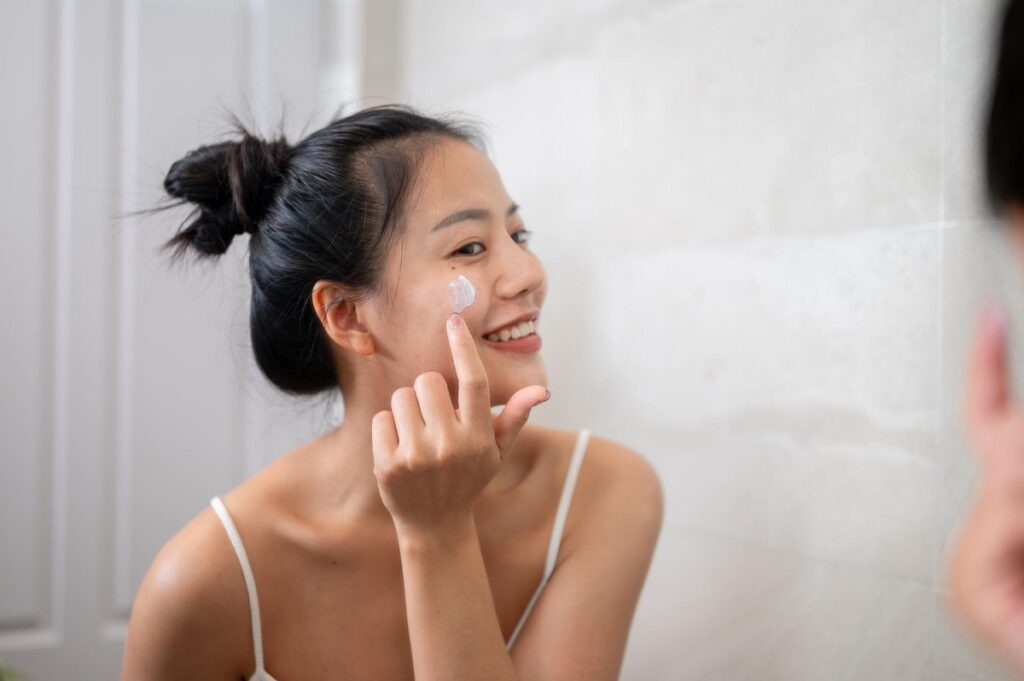
With one hand under the chin and the other gently tapping the cheeks, the forehead smoothed with delicate fingers… these quirky motions, once confined to the backrooms of beauty clinics, are now flooding Instagram feeds and YouTube tutorials.
Facial gymnastics is establishing itself as the latest anti-aging routine embraced by holistic beauty enthusiasts, lured in by the promise of a natural facelift—no needles or scalpels required.
Yet behind this viral trend lies a much deeper question: can we really sculpt our faces like we do our abs?
Amidst the deluge of before-and-after videos and influencers swearing by their daily facial routines, dermatologists remain divided. With the clash of popular enthusiasm and scientific skepticism, it’s time to untangle fact from fiction.
Facial gymnastics: miracle technique or well-marketed mirage?
Since beauty influencers with glowing complexions have showcased their facial routines on TikTok, the phenomenon of facial gymnastics has emerged as a trendy beauty ritual.
A series of simple exercises, often likened to yoga for the skin, promises firmness, radiance, and lifted cheeks—all without surgery. However, behind these often viral promises lurks an unsettling question: does this practice truly have measurable anti-aging effects?
The concept is appealing; it involves contracting, massaging, and stretching certain facial muscles to enhance blood circulation, tighten the facial contour, and boost collagen production.
In essence, it’s about making your face “sweat” to better maintain its youthfulness. Among the notable figures endorsing this practice are Meghan Markle, a proponent of face sculpting, and actress Eva Longoria, who swears by her facial toning sessions. But should we see their endorsements as scientific validation or just another photogenic trend?
What scientific studies reveal (and what they don’t)
This is the pressing question on everyone’s mind, especially considering the time-lapse videos of “rejuvenated” faces: does facial gymnastics really work? To date, scientific literature remains cautious.
A study published in 2018 in JAMA Dermatology indicated moderate improvement in appearance among women aged 40 to 65 after 20 weeks of regular practice. The faces appeared slightly fuller, particularly in the cheek area. Yet, the limited sample of just 16 participants tempers this enthusiasm.
Dr. Murad Alam, a co-author of the study, acknowledged, “The results are promising, but they need to be confirmed by larger research.”
Other experts, like New York dermatologist Dr. David Colbert, highlight the potential for an opposite effect. He warns that repeatedly making certain facial expressions could exaggerate dynamic wrinkles, such as those on the forehead or around the eyes.
Another limitation is the commitment required: to see results, one must engage in at least 30 minutes of practice, 5 to 6 times a week. However, few individuals manage to maintain this rigorous schedule over time.
Moreover, in contrast to a one-time cosmetic treatment, the effects of facial gymnastics would cease immediately upon discontinuation.
Why facial gymnastics is thriving (even without irrefutable evidence)
So why the overwhelming interest in a method that is still lacking concrete evidence? Simply put, facial gymnastics checks all the boxes for modern wellness: it’s natural, free, can be done at home, and most importantly, it makes for great social media content.
It embodies a quest for regaining control over one’s appearance without resorting to aesthetic medicine.
It also captivates with its ritualistic qualities. Much like skincare routines, it offers a soothing moment for self-care, allowing individuals to tackle the signs of aging head-on.
Even skeptics admit that massaging the face improves circulation and relaxes tension—psychological benefits that, if nothing else, provide a sense of well-being.
Within this context, certain moves have gained acclaim for their perceived effectiveness:
- Gentle pinches on the jawline to reshape contours
- Circular pressure on the temples and forehead to release tension
- Manual “lifting” of the neck towards the cheeks to counteract gravity
However, caution is advised when it comes to self-administered beauty treatments. If not performed correctly, some movements could weaken the delicate skin around the eyes or lead to accelerated sagging.
As the fascination continues, keep in mind the importance of proper technique and realistic expectations when it comes to facial gymnastics. The quest for beauty may be as much about the journey as it is about the results.