In times of extreme heat, it’s important to be very careful not only to avoid sunburns, but also to watch out for other skin symptoms that may indicate you’re in greater danger. A doctor explains how to recognize the signs of sun poisoning.
It’s extremely hot right now, and with the heatwave, simply going outside can become a risky behavior.
Without even realizing it, you can quickly expose yourself to the risk of sunburn and skin damage, even if you’ve applied the best sunscreen of 2025 before heading out.
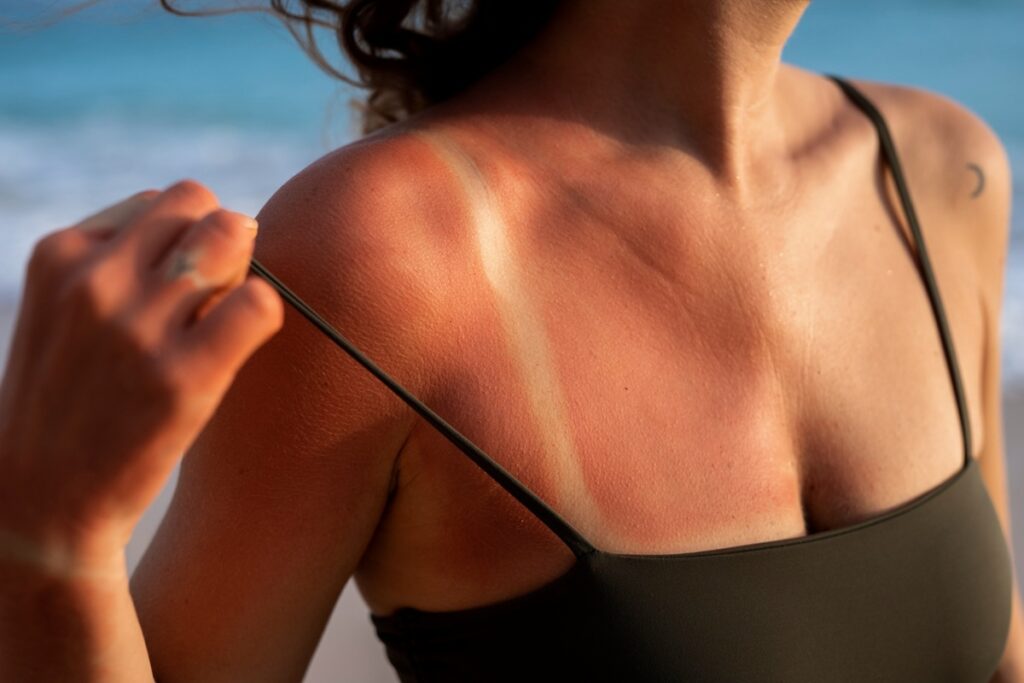
Have you spent hours under the sun during the heatwave and noticed your skin turning red? Be careful, it may not just be a simple sunburn, warns Dr. Gérald Kierzek, Medical Director at French Website Doctissimo.
Little known, the risk of sun poisoning is very real. This condition, which is essentially a worsened sunburn, poses a serious threat to your health.
“The body can no longer regulate heat properly, leading to hyperthermia and triggering multiple symptoms,” explains the doctor.
To know when redness or heat sensations are harmless, and when to be concerned, here are the skin signals that shouldn’t be ignored.
Sun poisoning: These 3 skin signs may indicate sun toxicity
When the skin heats up due to UV exposure, we often assume it’s just a sunburn. Although it is technically a burn, we tend to neglect its seriousness.
That’s a mistake, because what seems like a sunburn may actually be a sign that your body is being poisoned by too much sun. Never take the following skin symptoms lightly:
- Redness: A common way for the skin to alert us that the body is struggling with something. It could be a sign of sun poisoning.
- Pain: If your skin is painful to the touch even though you haven’t bumped it, it may be an overlooked symptom of sun poisoning.
- Blisters: Often associated with severe sunburn, they can also indicate that you’ve gone beyond a simple sunburn.
Sunburn or sun poisoning: What’s the difference?
To determine whether or not you’re experiencing sun poisoning, look for more general symptoms of heatstroke. According to Dr. Gérald Kierzek, you may suffer from headaches, fever, dizziness, or even muscle cramps.
You may also feel nauseous or have difficulty breathing. If that happens, it’s important to act quickly and call for medical help. In the worst cases, “it can lead to heat shock and a drop in blood pressure, potentially resulting in death,” warns the doctor.
Heatstroke: How to protect yourself during a heatwave
In periods of intense heat, it’s crucial to stay hydrated by drinking water regularly throughout the day. As for your skin, it’s important to protect it, as it can be a gateway to the kind of heatstroke known as sun poisoning. To avoid it, make sure to:
- Seek shade and avoid prolonged sun exposure
- Use high-protection sunscreen and reapply it every 2 hours at minimum
- Cover your skin as much as possible with lightweight clothing